

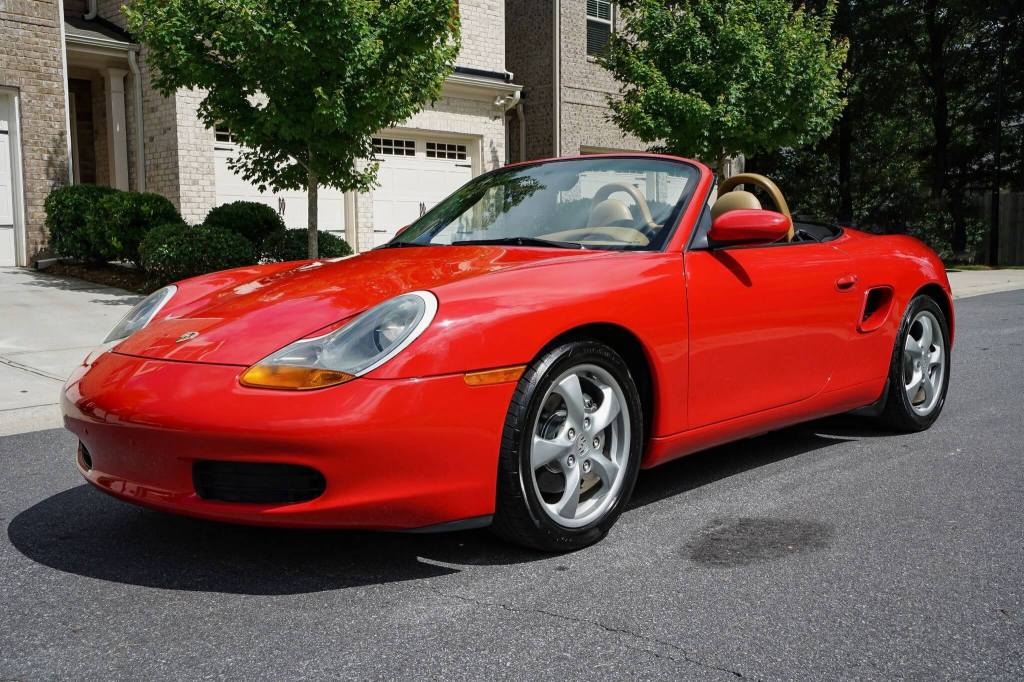
The Porsche 986 is the internal designation for the first-generation Porsche Boxster, a two-seat, mid-engine sports car that was produced by Porsche from 1996 to 2004. The 986 was the company’s first road-going mid-engine sports car since the 914, and it was also Porsche’s first model to be designed and built entirely in-house since the 911.
The Boxster was designed as an entry-level model that would appeal to a wider range of buyers than the more expensive 911. It was powered by a water-cooled, horizontally-opposed six-cylinder engine that was mounted in the middle of the car, and it was available with either a five-speed manual or a five-speed Tiptronic automatic transmission.
Over the course of its production run, the Boxster underwent a number of updates and changes. The most significant of these was the introduction of the Boxster S in 2000, which featured a larger and more powerful engine, as well as a number of other performance upgrades. In 2003, the Boxster received a facelift that included revised styling, a new interior, and a number of other improvements.
Overall, the Porsche 986 was well-received by critics and enthusiasts alike, and it helped to establish Porsche as a maker of high-quality, mid-engine sports cars. Today, the Boxster remains a popular choice among sports car enthusiasts, and it is often praised for its balance, handling, and overall driving experience.
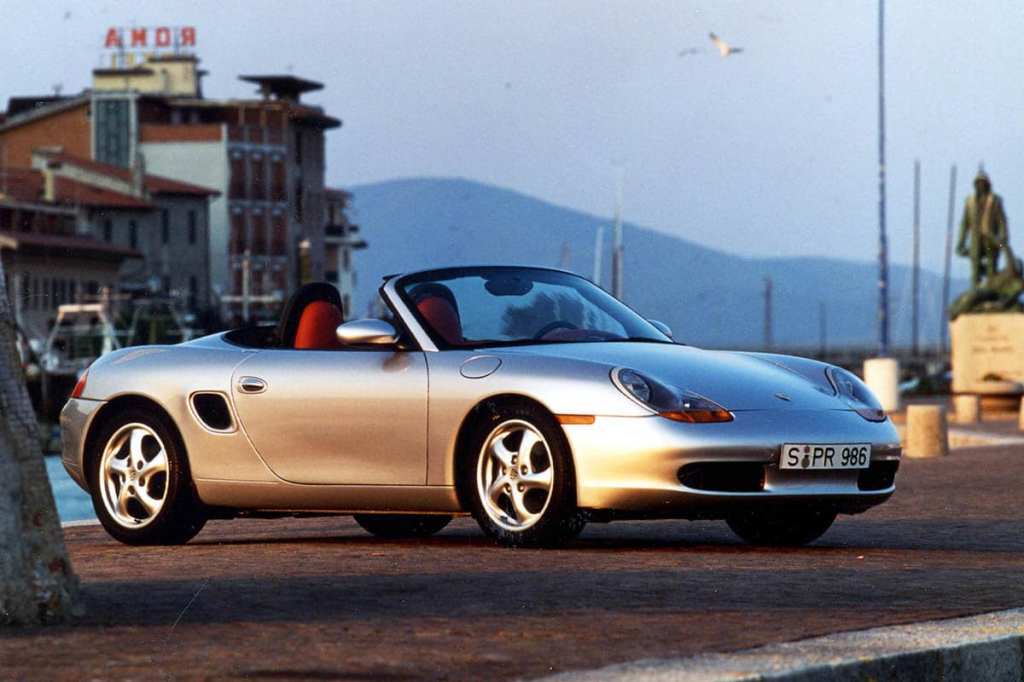
What are some of the improvements made to the Boxster in the 2003 facelift?
The 2003 facelift of the Porsche Boxster, also known as the 986.2 or the “Phase II” model, included a number of significant improvements over the earlier versions of the car. Some of the key changes included:
- Styling: The exterior of the car received a number of updates, including revised front and rear bumpers, new headlights and taillights, and a redesigned hood and trunk lid.
- Engine: The Boxster’s 2.7-liter flat-six engine was revised to produce 228 horsepower, up from 217 horsepower in the earlier models. The Boxster S’s 3.2-liter engine was also updated to produce 258 horsepower, up from 252 horsepower.
- Transmission: A new six-speed manual transmission was offered as an option, replacing the previous five-speed unit. The Tiptronic automatic transmission also received an extra gear, bringing the total to five speeds.
- Chassis: The suspension was revised to improve handling and stability, and the steering was made more precise.
- Interior: The interior of the car was updated with new materials and a revised dashboard, and a new optional navigation system was added.
- Safety: The Boxster received a number of safety improvements, including side-impact airbags and strengthened A-pillars.
What were the safety features of the Boxster before the 2003 facelift?
The Porsche Boxster, including the first-generation 986 model produced from 1996 to 2004, was designed with a number of safety features to protect occupants in the event of an accident. Some of these safety features included:
- Dual front airbags: The Boxster came standard with driver and passenger airbags, which were designed to deploy in the event of a frontal collision.
- Anti-lock brakes: The Boxster was equipped with anti-lock brakes (ABS) as standard equipment, which helped to prevent the wheels from locking up during hard braking and improve control.
- Traction control: The Boxster also came with traction control as standard, which helped to prevent the wheels from spinning and losing traction during acceleration.
- Roll-over protection: The Boxster was designed with a reinforced windshield frame and roll bars behind the seats to help protect occupants in the event of a roll-over.
- Side-impact protection: While the Boxster did not have side-impact airbags before the 2003 facelift, it did have reinforced doors and side-impact beams in the body structure to help protect occupants in a side impact collision.
Everything You Need to Know About the Porsche 911
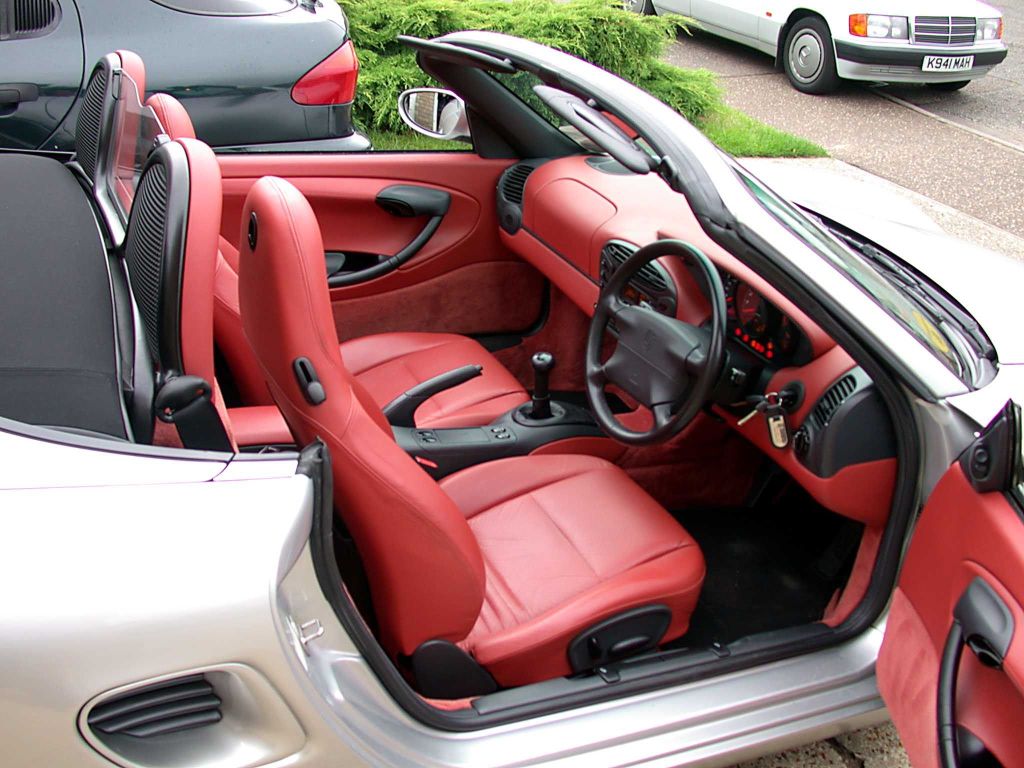
Porsche 986 interior
The interior of the Porsche 986, or first-generation Boxster, was designed to be both stylish and functional, with a focus on the driving experience. The overall design was simple and uncluttered, with a driver-centric layout that emphasized the car’s sporty nature.
Some of the key features of the Boxster’s interior included:
- Dashboard: The dashboard was designed with a clean, uncluttered layout, with simple gauges and controls that were easy to read and use. The center console was angled towards the driver for easy access, and the gear shifter was positioned within easy reach.
- Seats: The Boxster came standard with sport seats that were designed to provide good support and comfort during spirited driving. Leather upholstery was also available as an option.
- Steering wheel: The steering wheel was a three-spoke design that was designed to be both sporty and functional, with easy-to-access audio and cruise control buttons.
- Audio system: The Boxster came standard with a four-speaker audio system, with an optional Bose sound system available as an upgrade. The audio system was integrated into the dashboard design for a seamless appearance.
- Climate control: The Boxster was equipped with automatic climate control as standard, with easy-to-use controls that were integrated into the dashboard.
Boxster’s interior was well-regarded for its simplicity and functionality, with a focus on the driving experience. While some critics felt that the interior materials could have been of higher quality, most agreed that the overall design was well-executed and contributed to the car’s sporty character.
What were the available exterior colors for the Porsche 986?
The Porsche 986, or first-generation Boxster, was available in a variety of exterior colors during its production run from 1996 to 2004. The available colors varied somewhat from year to year, but some of the most common colors included:
- Arctic Silver Metallic
- Basalt Black Metallic
- Guards Red
- Lapis Blue Metallic
- Midnight Blue Metallic
- Ocean Blue Metallic
- Polar Silver Metallic
- Seal Grey Metallic
- Speed Yellow
- Zanzibar Red Metallic
In addition to these colors, there were also a number of other special-order colors available for the Boxster, as well as a range of optional paint finishes and trim packages that could be used to customize the car’s appearance. Overall, the Boxster was known for its sleek and stylish design, and the available color options helped to highlight the car’s sporty and dynamic character.
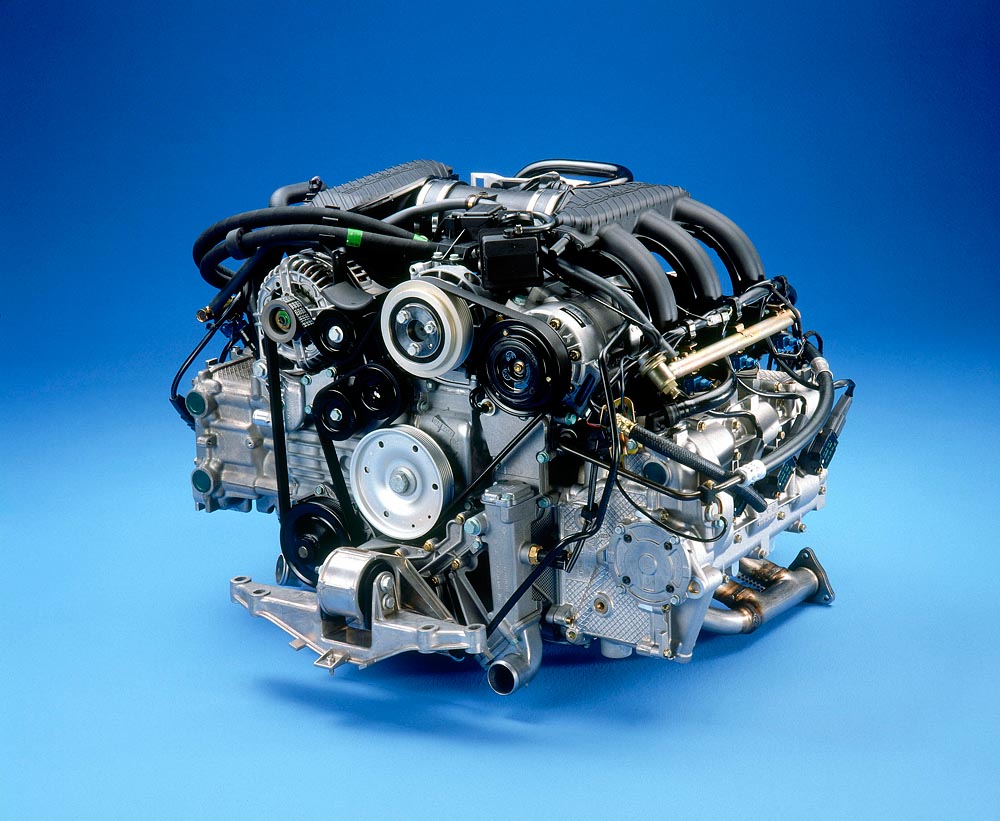
Porsche 986 engine
The Porsche 986, or first-generation Boxster, was powered by a range of horizontally-opposed six-cylinder engines that were designed and built by Porsche. The engines were water-cooled and mounted in the middle of the car, behind the seats, for optimal weight distribution and handling.
There were two main engine options available for the 986:
- Boxster: The base Boxster was powered by a 2.5-liter flat-six engine that produced 201 horsepower and 181 lb-ft of torque. The engine was mated to either a five-speed manual transmission or an optional five-speed Tiptronic automatic transmission.
- Boxster S: The Boxster S was introduced in 2000 and featured a larger and more powerful 3.2-liter flat-six engine that produced 250 horsepower and 225 lb-ft of torque. The Boxster S was available with either a six-speed manual or a five-speed Tiptronic automatic transmission.
Both engines featured Porsche’s VarioCam variable valve timing system, which helped to improve power and torque across a wide range of engine speeds. The engines were also designed to be lightweight and compact, with features such as integrated dry-sump lubrication systems and aluminum construction to reduce weight and improve performance.
The engines used in the Porsche 986 were well-regarded for their smooth power delivery, responsive throttle, and distinctive sound, and they helped to establish the Boxster as a high-performance sports car with excellent handling characteristics.
Porsche 986 Price
The price of a Porsche 986, or first-generation Boxster, varied depending on a number of factors, including the year, condition, mileage, and location of the car. When the Boxster was first introduced in 1996, the base price was around $40,000 USD, although this varied somewhat depending on the market.
Over the course of its production run, the price of the Boxster increased somewhat, especially as more powerful and higher-end models were introduced. For example, the Boxster S, which was introduced in 2000, had a starting price of around $50,000 USD.
Today, the price of a used Porsche 986 can vary widely depending on its condition and mileage. As of 2021, a well-maintained Boxster in good condition with moderate mileage (around 50,000 miles) might be expected to sell for between $10,000 and $20,000 USD, although prices can vary widely depending on the specific car and the market in which it is being sold. Higher-mileage examples or cars in need of significant repairs may sell for considerably less, while low-mileage, well-preserved examples or rare special edition models may sell for more.

Follow us on instagram
 Car Community
Leave a comment