

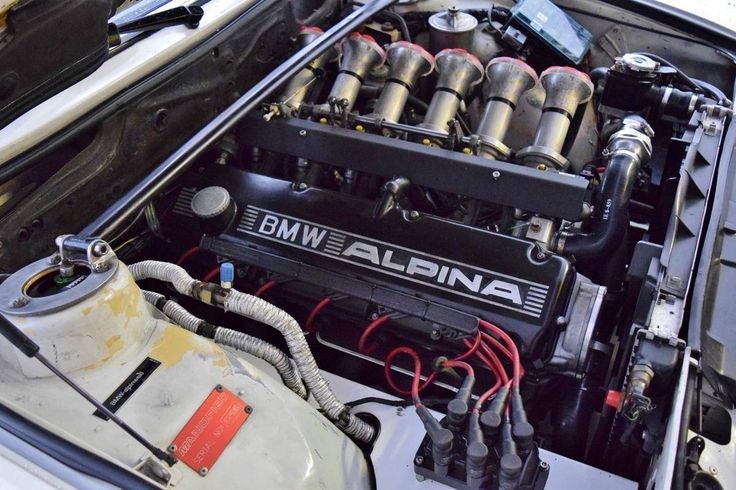
The BMW M30 Engine stands as a testament to engineering brilliance and performance excellence. Crafted by Bavarian Motor Works (BMW), this powerhouse has left an indelible mark in automotive history. Let’s explore its facets, unraveling its intricacies and highlighting its prowess.
| Engine Type | Displacement | Horsepower (hp) Range | Torque (lb-ft) Range | Common Applications |
|---|---|---|---|---|
| M30B30 | 2.8 L | 180-197 | 174-188 | E12 528i, E23 728i |
| M30B32 | 3.2 L | 184-215 | 195-210 | E3 3.0Si, E9 3.0CSi |
| M30B34 | 3.4 L | 182-208 | 214-225 | E23 733i, E24 633CSi |
| M30B35 | 3.5 L | 182-218 | 214-225 | E24 635CSi, E32 735i |
| M30B35 (US-Spec) | 3.5 L | 182-208 | 214-225 | E28 535i, E34 535i |
| M30B35 (Catalytic) | 3.5 L | 211-238 | 229-240 | E23 735i, E32 735i |
The BMW M30 engine is a six-cylinder inline engine that was produced by BMW from 1968 to 1994. It was used in various models throughout the years, including the BMW 5 Series, 6 Series, and 7 Series.
Here are some key features and specifications of the BMW M30 engine:
Displacement: The M30 engine had a displacement of either 2.5, 2.8, or 3.0 liters, depending on the specific variant.
Configuration: The M30 engine was an inline-six design, with all six cylinders arranged in a straight line. This configuration provides good balance and smooth operation.
Fuel System: The M30 engine used mechanical fuel injection in early models, and later variants were equipped with electronic fuel injection.
Valvetrain: The M30 engine featured an overhead camshaft design with two valves per cylinder. Some later versions of the engine, such as the M30B35, had four valves per cylinder.
Power Output: The power output of the M30 engine varied depending on the specific variant and model it was used in. The earlier versions produced around 140 to 200 horsepower, while later versions, such as the M30B35, could produce up to 218 horsepower.
Performance: The M30 engine provided a good balance of power and torque. It delivered smooth acceleration and decent performance for its time, especially in the higher-powered variants.
Durability: The M30 engine gained a reputation for its durability and longevity. Many examples of vehicles with M30 engines have racked up high mileage figures without major issues.
Legacy: The M30 engine played a significant role in BMW’s history and was widely regarded as a reliable and capable powerplant. It paved the way for subsequent generations of BMW engines and helped establish BMW’s reputation for producing sporty and performance-oriented vehicles.
If you are interested you should read about BMW M50 Engine

Cars with the M30 Engine
- BMW 2500/2800/3.0 Bavaria: These were large luxury sedans produced from 1968 to 1977. They were equipped with various versions of the M30 engine, ranging from 2.5 to 3.0 liters in displacement.
- BMW 5 Series (E12 and E28): The first and second generations of the BMW 5 Series, produced from 1972 to 1988, were available with M30 engines. The models included the 525, 528, and 535.
- BMW 6 Series (E24): The first-generation BMW 6 Series, produced from 1976 to 1989, featured the M30 engine in models such as the 630, 633, 635, and M635CSi.
- BMW 7 Series (E23 and E32): The first and second generations of the BMW 7 Series, produced from 1977 to 1994, were available with M30 engines. Models such as the 728, 730, 733, and 735 featured the M30 powerplant.
- BMW M1: The iconic BMW M1 supercar, produced from 1978 to 1981, was powered by a modified version of the M30 engine called the M88. This engine was specifically developed for the M1 and later used in the BMW M5 and M6 models.
- BMW 8 Series (E31): The first-generation BMW 8 Series, produced from 1989 to 1999, featured the M30 engine in the 840i model. However, it’s important to note that this was a limited production variant, and most 8 Series models were equipped with other engines.
 Car Community
Leave a comment