

For over two decades, one engine formed the beating heart of BMW’s rise from niche manufacturer to global performance powerhouse: the venerable M10. This rugged, versatile, and incredibly tunable four-cylinder is a cornerstone of BMW history, powering everything from humble sedans to championship-winning race cars and even laying the foundation for the iconic M1 supercar. This deep dive explores the M10’s legacy, its many variants, performance potential, maintenance needs, and current market value.
BMW M10 Engine Evolution (1962-1988)
Introduced in the BMW 1500 “Neue Klasse” in 1962, the M10 was a revelation. It replaced outdated designs and signaled BMW’s commitment to modern, sporting saloons. Its core design was brilliantly simple and robust:
- Cast Iron Block: Providing immense strength and durability.
- Aluminum SOHC Head: Lightweight and efficient.
- Heron-style Combustion Chambers: Initially flat, later evolving into hemispherical designs for better efficiency.
- Chain-Driven Camshaft: Reliable and low-maintenance.
- Displacements: Ranged from 1.5L to a mighty 2.0L (and beyond with tuning).
Over its 26-year production run, the M10 saw continuous refinement:
- Early (1962-1975): Featured Solex or Zenith carburetors, evolving to Kugelfischer mechanical fuel injection in performance models like the 2002tii.
- Later (1975-1988): Embraced Bosch K-Jetronic (CIS) or L-Jetronic electronic fuel injection for better emissions and drivability, primarily in the E21 3 Series (316, 318, 320i) and early E30 318i.
M10 Engine Variants & Applications
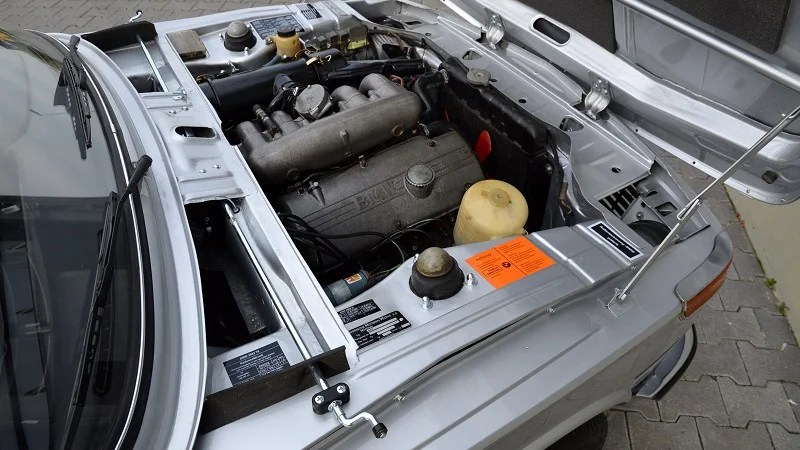
The M10’s adaptability was key to its longevity. Here are the major displacements and their most famous applications:
- 1.5L (1499cc): The original. Powered the BMW 1500 (Neue Klasse). ~75-80 hp.
- 1.6L (1573cc): Found in the BMW 1600, 1600-2, and early 1602. ~85-90 hp. Balanced performance and economy.
- 1.8L (1766cc): A hugely popular variant. Powered:
- BMW 1800, 1800TI/SA (Neue Klasse)
- BMW 1802, 1802TI
- Early BMW 318 (E21, E30)
- Outputs: ~90 hp (carb) up to 105 hp (fuel-injected E21 318i).
- 2.0L (1990cc): The performance king of the road-going variants. Applications:
- BMW 2002 (The Legend): Carbureted (2002 – ~100 hp), Fuel-Injected (2002tii – 130 hp, 2002 Turbo – 170 hp).
- BMW 320i (E21): Fuel-injected, ~125 hp.
- Early BMW 320i (E30): Fuel-injected, ~129 hp.
- The Ultimate Expression: M10 in Motorsport & M1
- Formula 2 (1966-1967): Highly modified 1.6L producing over 220 hp.
- BMW Turbo Concept (1972): Showcased a turbocharged M10, foreshadowing future tech.
- BMW 320 Turbo Group 5 (1977-1980): Paul Rosche’s masterpiece. 1.4L (for regulations) turbocharged M10 producing 300-350 hp initially, eventually pushing over 800 hp in qualifying trim! Dominated the European Touring Car Championship.
- BMW M1 (Procar & M88/1 Basis): While the production M1 used the M88 straight-six, its racing heart was undeniable: The M88/1 engine used in the Procar series was directly derived from the M10 block and architecture, bored and stroked to 3.5L and featuring 24 valves and Kugelfischer injection. This cemented the M10’s legacy as the foundation of BMW M.
If you are interested you should read about BMW M20 Engine
BMW M10 Performance Table
| Variant | Displacement | Application | Power (hp) |
|---|---|---|---|
| M115 (Early) | 1499cc | 1500 (Neue Klasse) | 75-80 |
| M116 | 1573cc | 1600-2, 1602 | 85-90 |
| M118 | 1766cc | 1802, 1802TI | 90-100 |
| M118 (E21) | 1766cc | E21 318i | 105 |
| M118 (E30) | 1766cc | E30 318i | 105 |
| M10 B18 (E30) | 1766cc | E30 318i | 105 |

Tuning the M10 Engine
The M10’s overbuilt iron block is a tuner’s dream, famously capable of handling immense power with proper preparation. Popular avenues include:
- Bolt-Ons (N/A): Performance carburetors (Weber DCOE, Dellorto DHLA), intake manifolds, exhaust headers, free-flow exhausts, and aggressive camshafts can wake up a naturally aspirated M10. Expect 130-160+ hp from a well-tuned 2.0L.
- Fuel Injection Upgrades: Converting carbureted engines to L-Jetronic or even modern EFI (Megasquirt, etc.) improves drivability, efficiency, and tuning precision. Upgrading CIS systems is also common.
- Forced Induction – The M10’s True Calling:
- Turbocharging: The path to big power. Using modern turbos, intercoolers, forged internals (pistons, rods), upgraded fuel systems (injectors, pump), and engine management (standalone ECU) can reliably yield 300-500+ hp on a built 2.0L. The block itself can handle it; the rest needs fortification.
- Supercharging: Less common than turbocharging, but offers instant throttle response. Requires similar internal and fuel system upgrades for high boost.
- Stroker Kits: Combining a larger crank with custom pistons/rods can increase displacement significantly (e.g., 2.2L, 2.3L, 2.5L+), providing more torque and power potential naturally aspirated or forced induction.
- Head Work: Porting, polishing, larger valves, and performance valve springs significantly improve airflow, especially vital for high-RPM or boosted applications. Aftermarket aluminum heads (e.g., from Ireland Engineering) offer major gains.
Key Tuning Rule: Strength comes from the bottom end. While the block is robust, high power levels demand forged pistons and connecting rods. Never underestimate the need for a robust fuel system and proper engine management for forced induction.
BMW M10 Engine Maintenance
Renowned for durability, the M10 still requires diligent care, especially in classic cars:
- Routine Maintenance is Key: Regular oil changes (20W-50 mineral or classic synthetic), valve adjustments (critical!), timing chain inspections, and coolant flushes are paramount. These engines thrive on consistency.
- Common Wear Items:
- Timing Chain & Guides: While robust, chains can stretch over very high mileage. Tensioners and guides wear. Listen for rattling – replace the chain set if unsure.
- Fuel System (FI): K-Jetronic (CIS) systems require specialized knowledge. Control pressures, warm-up regulators, and injectors can cause running issues. L-Jetronic is generally simpler.
- Carburetors: Need regular rebuilding, synchronization (if multiples), and tuning. Vacuum leaks are common culprits for poor running.
- Oil Leaks: Valve cover gasket, front crankshaft seal, distributor o-ring, and oil pan gasket are typical leak points. Rear main seal leaks are less common but possible.
- Cooling System: Aging radiators, water pumps, and hoses can fail. Overheating is an engine killer.
- Electrical: Grounding issues, aging sensors (on FI), and worn ignition components (points, condenser, coil) can cause drivability problems.
- Preventative Measures: Address oil leaks promptly. Upgrade the cooling system if tuning. Use high-quality filters and fluids. For CIS cars, find a specialist or learn the system thoroughly. Keep the valve train properly adjusted.
BMW M10 Engine & Car Price Guide
Prices vary wildly based on condition, originality, model, and tuning level.
- Used M10 Long Block (Core/Rebuildable): $200 – $800. Standard 1.8/2.0L cores are plentiful. Rare early blocks or known good runners command more.
- Fully Rebuilt Stock M10 (2.0L): $3,000 – $6,000+. Depends on machine shop costs, parts quality (OEM vs aftermarket), and who does the work.
- Performance Built M10 (Stroker, Forged Internals): $6,000 – $15,000+. Costs escalate quickly with displacement increases, head work, and high-end components (e.g., aluminum head).
- Turbo Kit (Basic – Requires Tuning/Internals): $2,500 – $5,000+ (manifold, turbo, wastegate, piping). Add $3k-$10k+ for full build (internals, ECU, fuel system, intercooler, labor).
- Complete Cars:
- BMW 2002 (Project/Runner): $5,000 – $15,000+
- BMW 2002 (Restored/Excellent): $20,000 – $50,000+ (tii and Turbos command significant premiums, often $70k+)
- E21 320i (Project/Runner): $2,000 – $8,000
- E21 320i (Excellent): $10,000 – $20,000
- Early E30 318i: Similar to E21, often slightly less. $1,500 – $15,000.
Key Factors: Originality, rust condition, service history, and model rarity (tii, Turbo, Alpina) dramatically impact car values. A well-documented, rust-free example is always worth significantly more.
BMW M12 & M13 F1 Engines
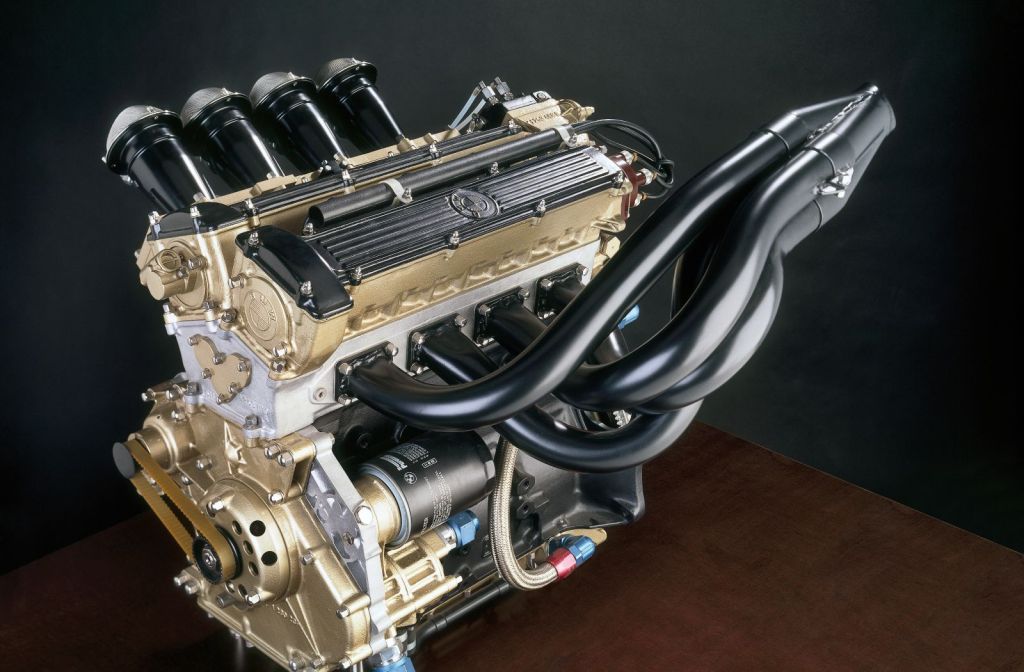
- Formula 1 Dominance (1982-1987): Developed specifically for the 1.5L turbocharged Formula 1 regulations, the M12/13 quickly established itself as the most powerful engine on the grid.
- Brabham BMW Era (1982-1986): Partnered with Bernie Ecclestone’s Brabham team, the M12/13 powered Nelson Piquet to the 1983 Drivers’ World Championship. Its defining characteristic was its astronomical boost pressure. While race trim typically ran around 3.8 bar (55 psi) producing a “mere” 640-800+ hp, qualifying trim was utterly insane. Engineers would crank the boost to rumored levels exceeding 5.5 bar (80+ psi), unleashing an earth-shattering 1,300 to 1,500 horsepower in short, explosive bursts. This qualifying advantage was often decisive. Reliability, while fragile at these extremes, was surprisingly manageable enough to win races and championships.
- Arrows, Benetton, Ligier (1986-1987): BMW supplied the M12/13 to other teams after the works Brabham partnership ended, though without the same level of integration and success. The engine remained formidable but often highlighted the challenges of packaging and drivability for customer teams.
- Engineering on the Absolute Edge: The M12/13 represented a quantum leap beyond even the formidable naturally aspirated M12 F2 engines:
- Forged & Billet Everything: Pistons, connecting rods, crankshaft – all were bespoke, crafted from the highest grade materials using advanced metallurgy to withstand unimaginable cylinder pressures and rotational forces. The crankshaft was a work of art machined from a single billet.
- Advanced 16-Valve DOHC Head: Building on F2 development, complex four-valve-per-cylinder heads with intricate porting were essential to flow the massive volumes of air required.
- Precision Ballistic Fueling: Sophisticated mechanical fuel injection systems, heavily based on Kugelfischer pump technology but massively scaled up, were capable of injecting vast quantities of fuel under immense pressure to match the airflow. Fuel consumption was staggering.
BMW M10 Engine FAQs
- What years was the BMW M10 engine produced?
- The M10 was produced from 1962 to 1988.
- What cars came with the M10 engine?
- Key models include: BMW 1500, 1600, 1800, 2000, 2002 (including tii & Turbo), 1502, 1602, 1802, E21 3 Series (316, 318, 320i), and early E30 318i. It also powered the Group 5 320 Turbo race car and formed the basis for the M1’s M88/1 race engine.
- Is the BMW M10 a reliable engine?
- Yes, exceptionally. Its simple, overbuilt design makes it very durable with proper maintenance, especially the cast iron block. Regular valve adjustments and oil changes are crucial.
- How much horsepower can a BMW M10 handle?
- The stock cast iron block is incredibly strong. With forged pistons and connecting rods, a robust fuel system, and proper tuning, a built M10 can reliably handle 400-600+ horsepower. The factory crankshaft is also very stout. The limit is often the cylinder head’s airflow or the tuner’s budget/skill.
- What’s the difference between the M10 and the M40/M42/M44 engines?
- The M10 is the original SOHC design. The M40 (and later M42/M44) are completely different, more modern DOHC engines introduced in the late 80s/early 90s (E30 318iS, E36). They share no major components with the M10.
- Was the BMW M1 engine based on the M10?
- Indirectly, but significantly. The production M1 (M88) was a bespoke inline-6. However, the M88/1 engine used in the M1 Procar series used a modified M10 engine block as its foundation. It was bored and stroked to 3.5L and fitted with a 24-valve Kugelfischer-injected head. This cemented the M10’s legacy as BMW M’s starting point.
- What are common problems with the M10 engine?
- Timing chain stretch/guide wear (high mileage), oil leaks (valve cover, front seal), fuel system issues (especially CIS complexity or carburetor tuning/vacuum leaks), cooling system failures (radiator, water pump), and ignition system wear (points models). Proper maintenance mitigates most.
- Is the BMW M10 engine still a good choice for a project or swap?
- Absolutely. Its simplicity, robustness, huge aftermarket support, immense tuning potential (especially for boost), and classic BMW pedigree make it a fantastic choice for restorations, 2002/E21 projects, or swaps into lighter classics (like older BMWs, Datsun 510s, or kit cars).
 Car Community
Leave a comment