

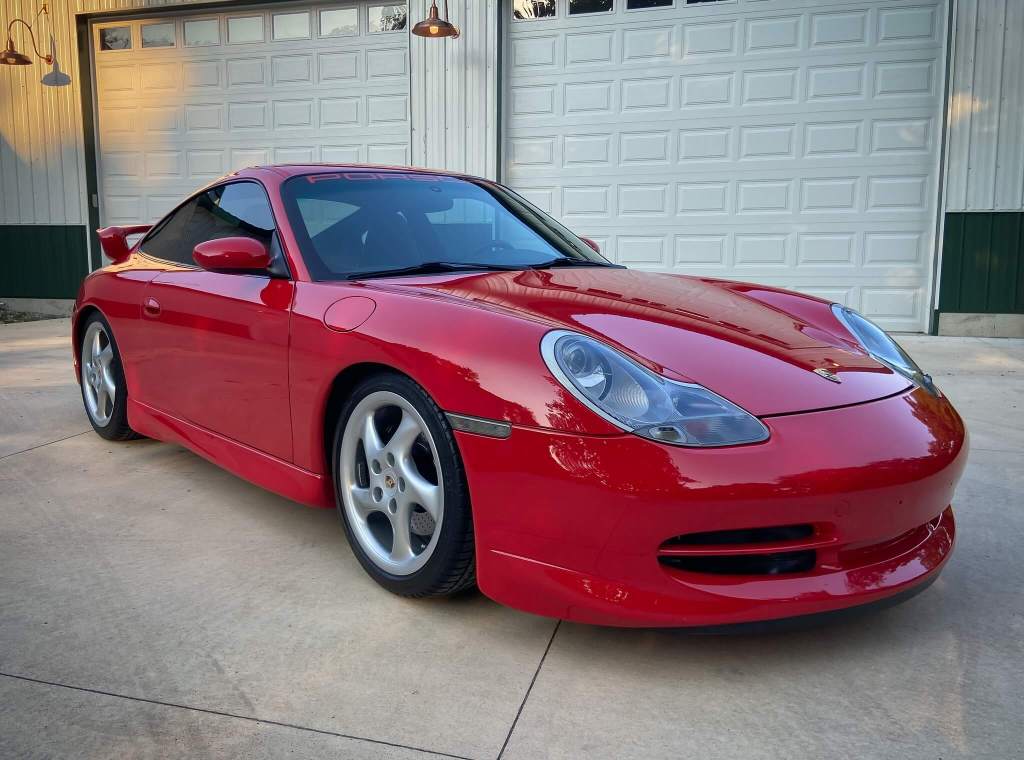
The Porsche 996 is a sports car that was produced by Porsche from 1997 to 2004. It was the first 911 model to feature a water-cooled engine, replacing the air-cooled engines that had been used in previous generations of the 911. The 996 was also the first 911 to be built on a new platform, which allowed for improved handling and performance.
The Porsche 996 was available in a variety of different models, including the Carrera, Carrera 4, Targa, Turbo, and GT3. The Carrera and Carrera 4 were powered by a 3.4-liter flat-six engine that produced 296 horsepower, while the Turbo model featured a 3.6-liter engine that produced 415 horsepower. The GT3, which was designed for track use, featured a naturally aspirated 3.6-liter engine that produced 380 horsepower.
The 996 was also notable for its controversial design, especially the “fried egg” headlights that were introduced on some models. While the design was divisive at the time, the 996 has since gained a reputation as a classic Porsche, thanks in part to its excellent performance and handling characteristics.
Porsche 996 is a popular choice among enthusiasts and collectors, especially the rare and highly sought-after GT3 and Turbo models. Despite its initial reception, the 996 is widely regarded as a significant milestone in the history of the Porsche 911 and a worthy successor to the air-cooled models that preceded it.
Everything You Need to Know About the Porsche 911

What are some other notable features of the Porsche 996?
In addition to its water-cooled engine and new platform, the Porsche 996 introduced several other notable features to the 911 lineup. Here are a few examples:
- New suspension system: The 996 featured a new suspension system with multi-link rear suspension, which provided improved handling and ride comfort compared to the previous 911 models.
- Automatic climate control: The 996 was the first 911 to offer automatic climate control as standard equipment, providing a more comfortable driving experience for the driver and passengers.
- Improved aerodynamics: The 996 was designed with improved aerodynamics, featuring a more rounded front end and smoother body lines compared to the previous 911 models. This helped to reduce drag and improve stability at high speeds.
- Advanced safety features: The 996 was one of the first sports cars to feature side airbags as standard equipment, helping to improve occupant safety in the event of a collision.
- Optional Tiptronic automatic transmission: The 996 was the first 911 to offer an optional Tiptronic automatic transmission, which allowed drivers to manually shift gears using buttons on the steering wheel or gear selector.

Porsche 996 interior
The Porsche 996 interior features a driver-oriented design with high-quality materials and advanced technology. Here are some notable features of the 996 interior:
- Instrument cluster: The 996 features a classic Porsche instrument cluster with centrally mounted tachometer and speedometer, flanked by smaller gauges for oil temperature, oil pressure, coolant temperature, and fuel level.
- Center console: The center console of the 996 is dominated by a large LCD display that shows information for the audio system, climate control, and other vehicle settings. The console also features controls for the radio and CD player, climate control, and optional navigation system.
- Seats: The 996 features sports seats with excellent lateral support, especially in the Turbo and GT3 models. The seats are upholstered in high-quality leather and offer a range of adjustments to ensure a comfortable driving position.
- Steering wheel: The three-spoke steering wheel of the 996 is wrapped in leather and features integrated controls for the audio system and trip computer.
- Materials: The 996 interior is constructed using high-quality materials, including leather, aluminum, and carbon fiber. The fit and finish are excellent, with tight tolerances and attention to detail throughout the cabin.
The Porsche 996 interior provides a comfortable and luxurious driving environment, with a focus on driver engagement and advanced technology. While some have criticized the interior for being too sterile or lacking character compared to earlier 911 models, it is still considered a high point in terms of quality and craftsmanship.
What are some of the criticisms of the 996 interior?
While the Porsche 996 interior is generally regarded as high-quality and luxurious, there have been some criticisms of certain aspects of the design. Here are a few examples:
- Cheap-looking plastics: Some critics have noted that certain plastic components in the 996 interior, such as the air vents and dashboard trim, look and feel cheap compared to the rest of the cabin.
- Lack of character: Compared to earlier 911 models, some enthusiasts feel that the 996 interior lacks the same level of character and charm, with a more generic and modern design.
- Uninspiring color choices: The 996 interior was offered in a range of colors, but some critics have suggested that the choices were somewhat uninspired, with a limited selection of bold or unique color options.
- Poor ergonomics: While the 996 interior is generally well-designed, some drivers have noted that certain controls and switches are poorly placed or difficult to use, especially in the earlier models.
It’s worth noting that many of these criticisms are subjective and may not be shared by all enthusiasts or owners of the Porsche 996. Despite these criticisms, the 996 interior is still regarded as a significant improvement over earlier 911 models, with a more comfortable and luxurious driving environment.

Porsche 996 engine
The Porsche 996 was offered with a range of engine options, all of which were water-cooled and featured advanced technology compared to the air-cooled engines used in earlier 911 models. Here are some of the notable engines offered in the 996:
- 3.4-liter flat-six: The base engine in the 996 Carrera and Carrera 4 models was a 3.4-liter flat-six that produced 296 horsepower and 258 lb-ft of torque. This engine featured VarioCam variable valve timing and was known for its smooth power delivery and high-revving nature.
- 3.6-liter flat-six: The 996 Turbo and GT3 models featured a larger 3.6-liter flat-six engine that produced significantly more power. In the Turbo, this engine was turbocharged and intercooled, producing 415 horsepower and 415 lb-ft of torque. In the GT3, the naturally aspirated version of this engine produced 380 horsepower and 284 lb-ft of torque.
- Mezger engine: The Mezger engine was a high-performance engine used in the 996 GT3 and Turbo models, named after Hans Mezger, the Porsche engineer who designed it. This engine featured a unique dry-sump lubrication system, titanium connecting rods, and other high-performance components, making it one of the most advanced and powerful engines ever used in a 911.
Overall, the engines used in the Porsche 996 were known for their advanced technology, high performance, and excellent reliability. While some enthusiasts prefer the air-cooled engines used in earlier 911 models, the water-cooled engines in the 996 represented a significant step forward in terms of performance and refinement.

Follow us on instagram
 Car Community
Leave a comment