

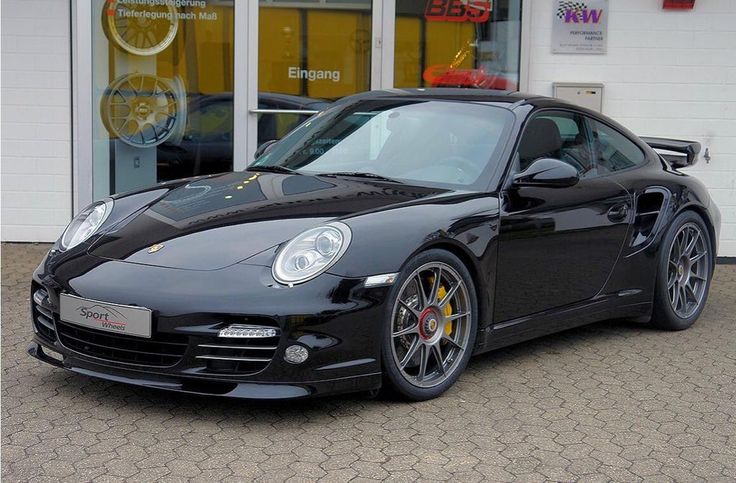
The Porsche 997 is a sports car that was produced by Porsche AG from 2004 to 2012. It is the successor to the Porsche 996 and was succeeded by the Porsche 991. The 997 was offered in both coupe and cabriolet body styles, with rear-wheel drive and all-wheel drive options.
The 997 was available with a range of engines, including naturally aspirated and turbocharged flat-six engines ranging in output from around 300 to 530 horsepower. The top-of-the-line model was the 911 GT2 RS, which was equipped with a twin-turbocharged 3.6-liter flat-six engine producing 620 horsepower and 516 lb-ft of torque.
The 997 received several updates throughout its production run, including revised styling, upgraded engines, and improved technology. Notable variants of the 997 include the high-performance GT3 and GT3 RS models, as well as the limited-edition 911 Sport Classic and 911 Speedster.
What are the unique features of the 911 Sport Classic and 911 Speedster?
The Porsche 911 Sport Classic and 911 Speedster are both unique variants of the 997 that were produced in limited numbers.
The 911 Sport Classic was introduced in 2010 and was limited to just 250 units. It featured a number of unique styling elements, including a “double-bubble” roof that was reminiscent of classic racing Porsches, as well as a ducktail spoiler, Fuchs-style wheels, and unique front and rear bumpers. The Sport Classic also featured a bespoke interior with brown leather upholstery and houndstooth fabric inserts.
Under the hood, the Sport Classic was powered by a naturally aspirated 3.8-liter flat-six engine that produced 408 horsepower and 310 lb-ft of torque. This engine was mated to a six-speed manual transmission and could propel the car from 0 to 60 mph in just 4.6 seconds.
The 911 Speedster was also produced in limited numbers, with just 356 units built in 2011. It was based on the 911 GTS and featured a chopped windshield and a manually operated fabric roof. The Speedster also featured unique styling elements, including a pair of humps behind the seats that were inspired by the iconic 356 Speedster.
Under the hood, the Speedster was powered by a naturally aspirated 3.8-liter flat-six engine that produced 402 horsepower and 310 lb-ft of torque. It was available with either a six-speed manual or seven-speed PDK transmission, and could accelerate from 0 to 60 mph in just 4.2 seconds.
Everything You Need to Know About the Porsche 911

Porsche 997 interior
The interior of the Porsche 997 was designed to provide a comfortable and sporty driving experience. It featured a driver-focused layout with a center console that was angled towards the driver, putting all of the important controls within easy reach.
The dashboard of the 997 was characterized by its simplicity and functionality, with a clean and uncluttered design. The instrument cluster featured easy-to-read gauges, including a central tachometer that was flanked by a speedometer and other important displays.
The seats in the 997 were designed to provide both comfort and support during spirited driving. They were available in a range of materials, including leather, Alcantara, and a combination of the two. The seats were also available with a range of power adjustments, including height, tilt, and lumbar support.
The 997 also featured a range of technology and convenience features, depending on the model and options chosen. These included a premium sound system, a navigation system, and climate control. Some models also featured adaptive suspension systems, which allowed the driver to adjust the firmness of the suspension to suit their driving style and road conditions.
Overall, the interior of the Porsche 997 was designed to provide a high level of comfort and convenience, while still maintaining the sporty and driver-focused nature of the car.

Porsche 997 engine
The Porsche 997 was offered with a range of engines throughout its production run, including naturally aspirated and turbocharged flat-six engines with varying levels of power output. Here are some of the engines that were available:
- 3.6-liter flat-six: This engine was available in the 997 Carrera and Carrera S models from 2005 to 2008. It produced 325 horsepower and 273 lb-ft of torque in the Carrera, and 355 horsepower and 295 lb-ft of torque in the Carrera S.
- 3.8-liter flat-six: This engine was introduced in the 997 Carrera S in 2009 and was later offered in other models. It produced 385 horsepower and 310 lb-ft of torque in the Carrera S, and 408 horsepower and 310 lb-ft of torque in the limited-edition 911 Sport Classic.
- 3.6-liter twin-turbo flat-six: This engine was available in the 997 Turbo and Turbo S models. It produced 480 horsepower and 460 lb-ft of torque in the Turbo, and 530 horsepower and 516 lb-ft of torque in the Turbo S.
- 3.8-liter naturally aspirated flat-six: This engine was available in the 997 GT3 and GT3 RS models. It produced 435 horsepower and 317 lb-ft of torque in the GT3, and 450 horsepower and 317 lb-ft of torque in the GT3 RS.
- 3.6-liter twin-turbo flat-six: This engine was available in the limited-edition 997 GT2 and GT2 RS models. It produced 523 horsepower and 505 lb-ft of torque in the GT2, and 620 horsepower and 516 lb-ft of torque in the GT2 RS.
All of these engines were paired with either a six-speed manual or seven-speed PDK dual-clutch automatic transmission, depending on the model and options chosen. The engines in the 997 were known for their high-revving nature, linear power delivery, and distinctive flat-six exhaust note.

Follow us on instagram
 Car Community
Leave a comment