

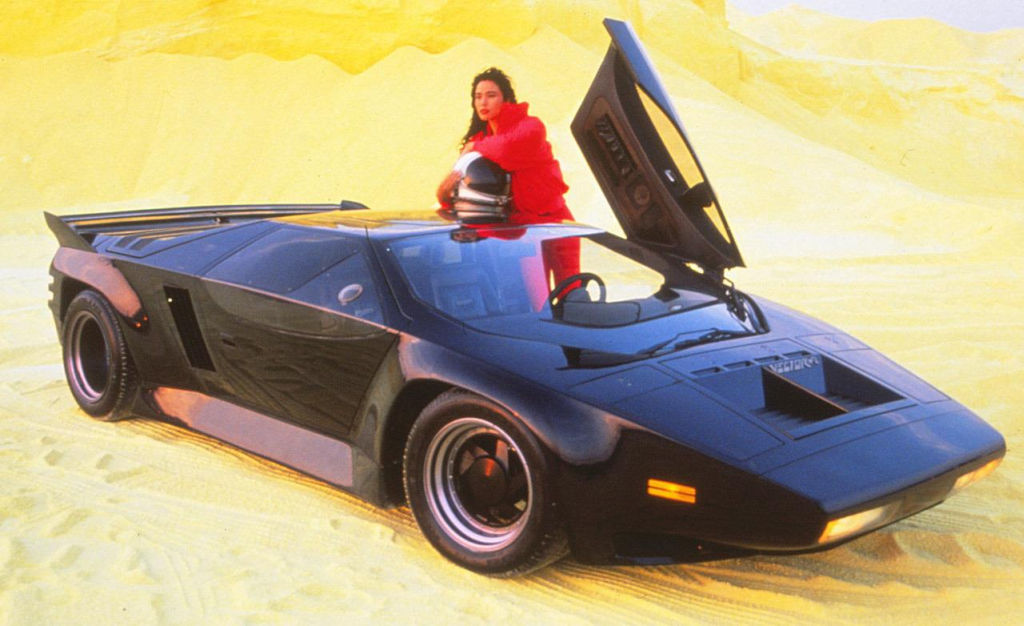
The Vector W2 was a supercar produced by Vector Motors, an American automotive company founded by Gerald Wiegert in the late 1970s. The W2 was designed as a successor to the Vector W8 and aimed to push the boundaries of automotive technology and performance.
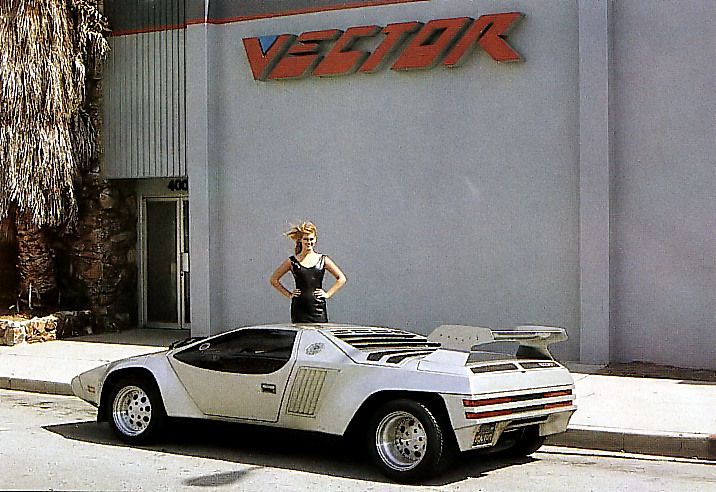
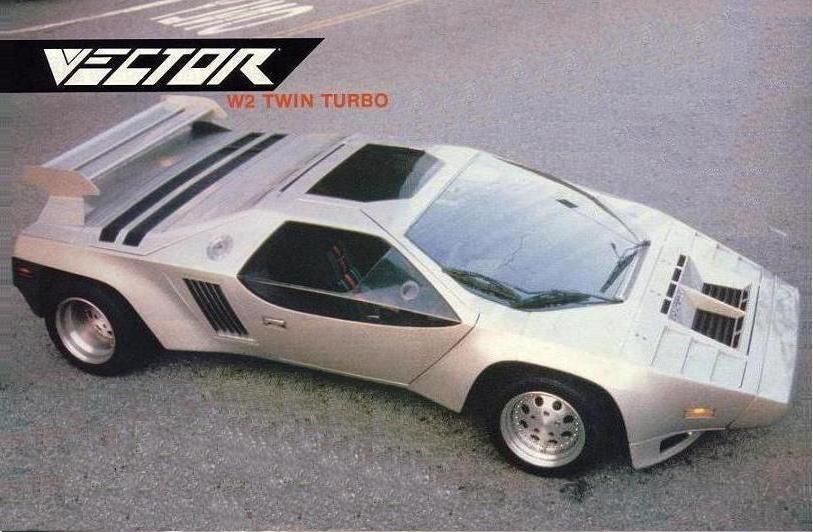
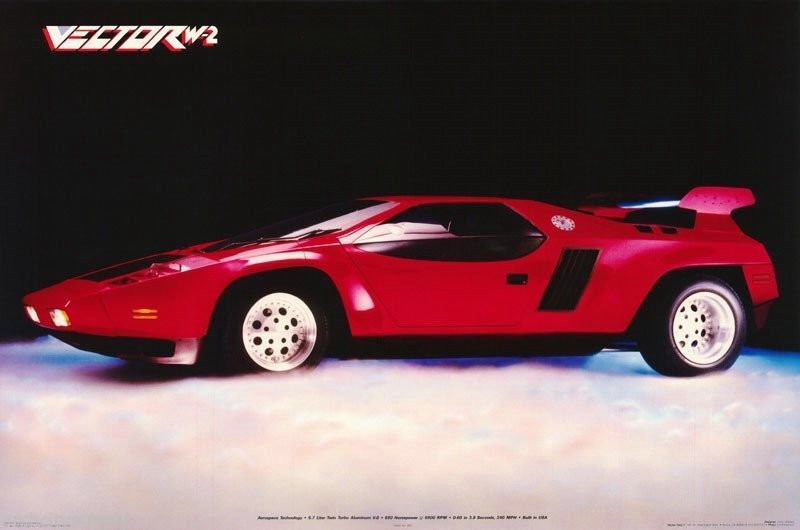
The car featured a sleek and futuristic design, characterized by its low-slung body, gull-wing doors, and aggressive aerodynamic elements. Under the hood, the W2 housed a mid-mounted twin-turbocharged V8 engine, which was capable of producing around 625 horsepower.
Some Key Features :
| Performance Metrics | Details |
|---|---|
| Engine | Twin-turbocharged V8 |
| Power Output | 600+ horsepower |
| Acceleration (0-60 mph) | Under 4 seconds |
| Top Speed | 220+ mph |
| Transmission | 5-speed manual/3-speed automatic |
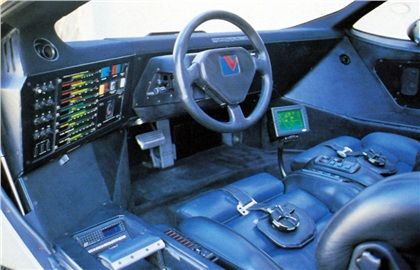
Interior :
W2’s interior was designed to match the futuristic and high-performance nature of the car. It featured a driver-focused cockpit with a range of advanced features and luxurious appointments.
The seating arrangement typically consisted of two sports seats, upholstered in high-quality materials such as leather or suede, providing excellent support and comfort for both the driver and passenger. The seats were often adjustable to accommodate different driving preferences.
The dashboard design was characterized by a mix of digital and analog elements. It included a cluster of gauges and dials to provide essential information to the driver, such as speed, engine RPM, and fuel levels. The Vector W2 was known for its advanced instrumentation, which often included digital displays and cutting-edge technology for the time.
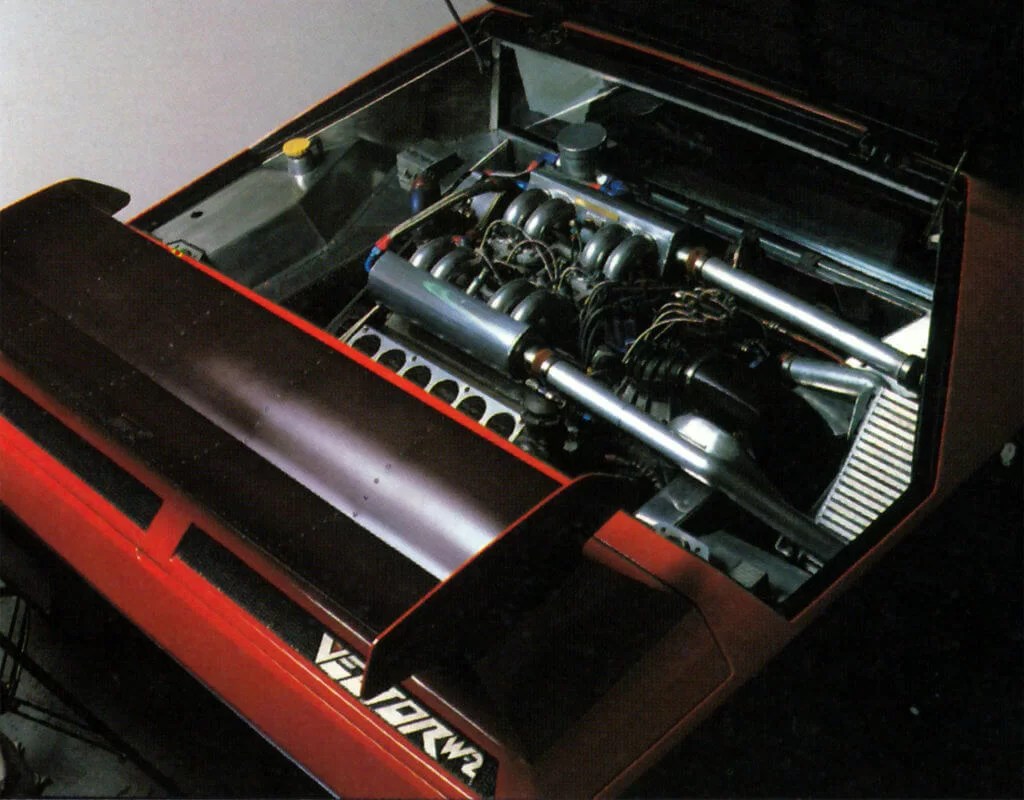
Engine :
Vector W2 was equipped with a powerful and advanced engine for its time. It featured a mid-mounted twin-turbocharged V8 engine, which provided the car with impressive performance capabilities.
The specifics of the Vector W2’s engine can vary depending on the specific model and prototype, as the car underwent several iterations and refinements throughout its development. However, some general information about the engine is available:
Configuration: The engine was a V8 configuration, which means it had eight cylinders arranged in a V shape. The exact displacement and cylinder arrangement could vary.
Forced Induction: The Vector W2’s engine utilized twin turbochargers. Turbocharging is a method of forced induction that uses exhaust gases to drive compressors, which in turn force more air into the engine. This results in increased power output.
Horsepower: The engine produced around 625 horsepower. This considerable power output contributed to the Vector W2’s exceptional performance.
Mid-Engine Layout: The engine was positioned in the middle of the car, behind the passenger compartment but ahead of the rear axle. This configuration, known as mid-engine layout, helps improve weight distribution and handling characteristics.
Performance: The Vector W2’s engine, combined with its lightweight construction, allowed the car to achieve impressive performance figures. It was reported to have a top speed of over 220 mph (354 km/h) and could accelerate from 0 to 60 mph (0 to 97 km/h) in approximately 4 seconds.
FAQ’s :
How many Vector W2 cars were produced?
The Vector W2 was produced in limited numbers. Exact production figures vary, but it is estimated that fewer than 20 Vector W2 cars were built.
What is the top speed of the Vector W2?
The Vector W2 was reported to have a top speed of over 220 mph (354 km/h), making it one of the fastest production cars of its time.
What engine does the Vector W2 have?
The Vector W2 featured a mid-mounted twin-turbocharged V8 engine. The exact specifications of the engine varied, but it produced around 625 horsepower.
How fast is the Vector W2 in terms of acceleration?
The Vector W2 could accelerate from 0 to 60 mph (0 to 97 km/h) in approximately 4 seconds.
What is the design of the Vector W2 like?
The Vector W2 had a futuristic and aerodynamic design, characterized by its low-slung body, gull-wing doors, and aggressive styling cues. It was intended to be visually striking and unique.
Porsche 911 High Quality Poster

BMW M10 Engine
For over two decades, one engine formed the beating heart of BMW’s rise from niche manufacturer to global performance powerhouse: the venerable M10. This rugged, versatile, and incredibly tunable four-cylinder is a cornerstone of BMW history, powering everything from humble sedans to championship-winning race cars and even laying the foundation for the iconic M1 supercar. This…


Honda R-Series Engine: Your Complete Guide
Picture an engine family so versatile it powers everything from Tokyo commuter cars to American SUVs – all while delivering near-hybrid efficiency without a battery. That’s the Honda R-Series: the unsung hero in 20+ million vehicles since 2006. Forget the flashy K-Series – this is Honda’s real-world engineering masterpiece. We’ll dissect every engine, including the overlooked R16A/B, and…

Honda K-Series Engine: Full Guide
two things you can’t beat: your wife when she’s pregnant and a tuned Honda K engine, they make it much harder for other car manufactures to compete with such a cheap and powerful engine. drop it in your noisy civic and boom you are on the same level with mustangs. this engine family spans over…

Honda J-Series Engine
Since its debut in the late 1990s, this V6 engine series has powered everything from sleek sedans like the Honda Accord and Acura TL to rugged SUVs like the Pilot and Odyssey. In this definitive guide, we’ll explore every J-Series variant, their technical specs, tuning potential, maintenance secrets, and FAQs. Whether you’re a Honda enthusiast, mechanic,…

Honda H-Series Engine
From the screaming H22A in the Prelude SiR to the torquey H25A in the Odyssey, this series has powered some of Honda’s most iconic models. In this exhaustive guide, we cover every H-Series variant, including overlooked engines, with precise specs, tuning insights, and FAQs backed by in-depth research. Honda H-Series Evolution The H-Series debuted in 1992 with…
 Car Community
Leave a comment