

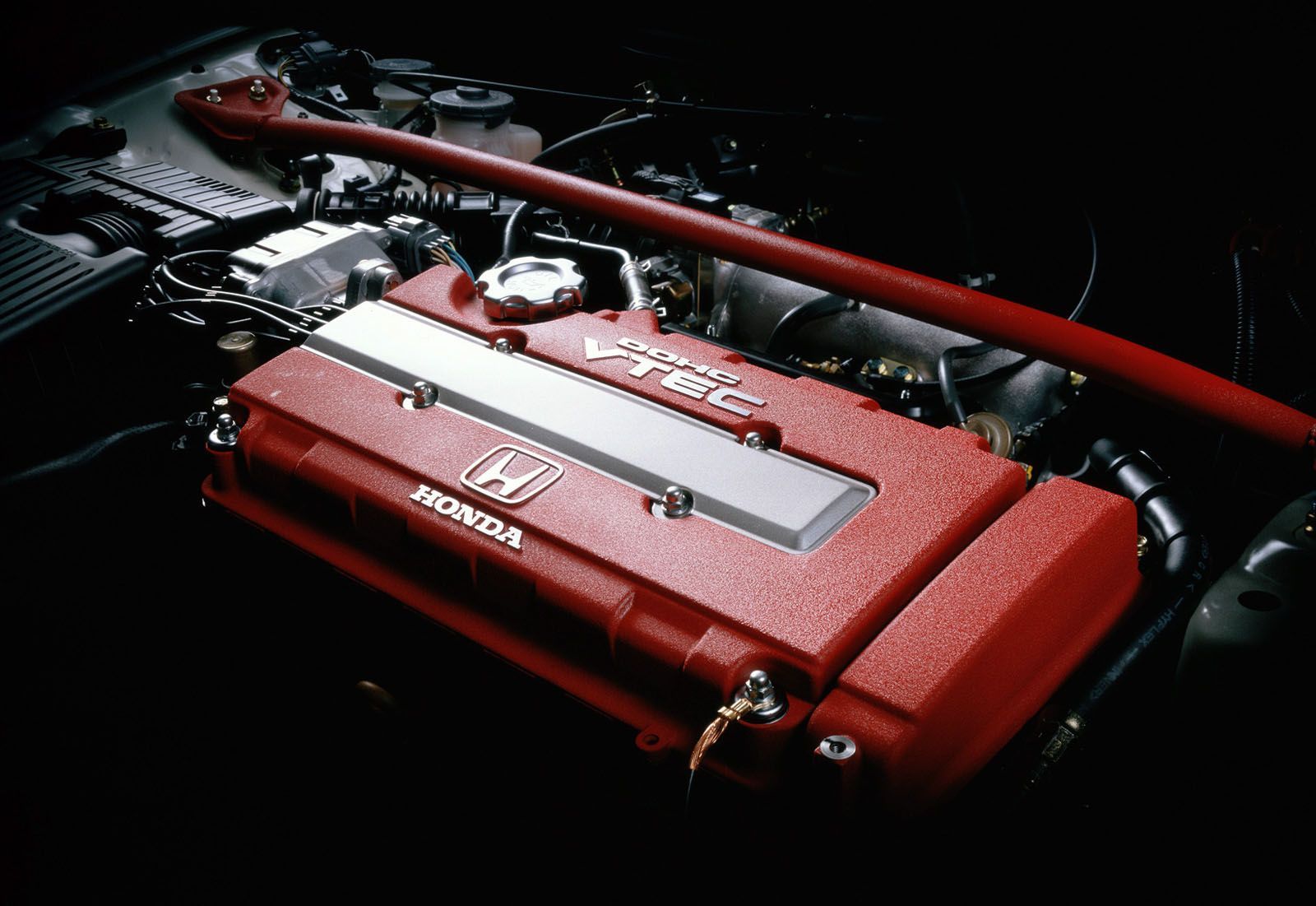
From the screaming H22A in the Prelude SiR to the torquey H25A in the Odyssey, this series has powered some of Honda’s most iconic models. In this exhaustive guide, we cover every H-Series variant, including overlooked engines, with precise specs, tuning insights, and FAQs backed by in-depth research.
Honda H-Series Evolution
The H-Series debuted in 1992 with the fourth-generation Honda Prelude, introducing Honda’s first DOHC VTEC engine. Designed to compete with Japanese sports coupes, it balanced race-inspired performance with daily-driver reliability.
Over its lifespan, the H-Series expanded to include engines for the Accord, Inspire, Odyssey, and even Japan’s touring car series. By the mid-2000s, Honda phased out the H-Series in favor of the K-Series, but its legacy persists in tuner culture.
Key Innovations:
- DOHC VTEC: Variable Valve Timing and Lift Electronic Control for explosive top-end power.
- Closed-Deck Blocks: Robust design for handling forced induction.
- Forged Internals: High-performance variants used lightweight, durable components.
- Diverse Applications: From 190 HP sports cars to 200 HP minivans.

Honda H-Series Engine Breakdown
All variants, including JDM exclusives and rare models, per Honda’s official classifications.
1. H22A (JDM Spec)
- Displacement: 2.2L (2,157 cc)
- Configuration: DOHC VTEC
- Power: 217–220 HP @ 7,200 RPM
- Torque: 163 lb-ft @ 6,700 RPM
- Redline: 8,000 RPM
- Compression: 11.0:1
- Applications: Honda Prelude SiR VTEC (1992–1996), Accord SiR (Japan)
- Features: Race-bred valvetrain, aggressive camshafts, and a lightweight crankshaft.
2. H22A1/A4 (USDM Spec)
- Displacement: 2.2L
- Configuration: DOHC VTEC
- Power: 190–200 HP @ 6,800 RPM
- Torque: 158–161 lb-ft @ 5,500 RPM
- Redline: 7,400 RPM
- Applications: Honda Prelude VTEC (1993–2001)
- Features: Detuned for emissions but retained VTEC’s signature “kick.”
3. H23A1
- Displacement: 2.3L (2,259 cc)
- Configuration: SOHC Non-VTEC
- Power: 160–170 HP @ 5,800 RPM
- Torque: 156–160 lb-ft @ 4,500 RPM
- Redline: 6,800 RPM
- Applications: Honda Prelude S (1993–1996), Accord Wagon
- Features: Focused on low-end torque and reliability; non-interference design.
4. H23A Blue Top (JDM)
- Displacement: 2.3L
- Configuration: DOHC VTEC
- Power: 190–200 HP @ 6,800 RPM
- Torque: 164 lb-ft @ 5,300 RPM
- Redline: 7,200 RPM
- Applications: JDM Accord SiR, Prelude SiR S-Spec
- Features: Rare blue valve cover, high-lift cams, and revised intake manifold.
5. H25A
- Displacement: 2.5L (2,454 cc)
- Configuration: SOHC i-VTEC
- Power: 200 HP @ 6,500 RPM
- Torque: 180 lb-ft @ 4,500 RPM
- Redline: 6,800 RPM
- Applications: Honda Odyssey Absolute (2004–2008), Elysion (Japan)
- Features: i-VTEC for efficiency, high torque for minivan practicality.
6. H24A
- Displacement: 2.4L (2,354 cc)
- Configuration: SOHC i-VTEC
- Power: 160–180 HP @ 6,000 RPM
- Torque: 161–164 lb-ft @ 3,500 RPM
- Redline: 6,500 RPM
- Applications: Honda Odyssey (2002–2004), Inspire (Japan)
- Features: Balanced power for family vehicles; interference design.
If you are interested you should read about other engines such as:

Honda H-Series Engine Performance Table
| Engine Code | Displacement | Power (HP) |
|---|---|---|
| H22A | 2.2L | 217–220 |
| H22A1/A4 | 2.2L | 190–200 |
| H23A1 | 2.3L | 160–170 |
| H23A Blue | 2.3L | 190–200 |
| H24A | 2.4L | 160–180 |
| H25A | 2.5L | 200 |
Honda H-Series Engine Tuning
Beginner Modifications
- Intake/Exhaust: A cold air intake (150–150–300) and 2.5” cat-back exhaust (400–400–800) unlock 15–25 HP.
- ECU Tuning: Hondata S300 ($650) adjusts VTEC engagement (earlier activation at 4,500 RPM) and removes speed limiters.
Advanced Builds
- Turbocharging: The H22A’s closed-deck block handles 12–18 PSI (300–400 HP) on stock internals.
- Cost: 3,000–3,000–6,000 (turbo kit, fuel injectors, tuning).
- Upgrades: Forged pistons/rods ($2,000+) for 500+ HP.
- NA Builds: High-compression pistons (11.5:1), Jun cams, and ITBs for 250+ HP.
Tuning Challenges:
- Torque Steer: Install a helical LSD ($1,200+) to manage wheelspin in FWD setups.
- Oil Cooling: Essential for turbo builds; add a Mishimoto oil cooler ($250).
Honda H-Series Maintenance
Critical Service Intervals
- Timing Belt: Replace every 60k–90k miles (interference engines like H22A/H23A Blue Top).
- Valve Adjustments: Check every 30k miles on VTEC models.
- Oil Changes: Use 5W-30 synthetic every 3k–5k miles.
Common Issues
- Oil Consumption: Worn piston rings in high-mileage H22As; replace with OEM or aftermarket rings.
- Distributor Failure: Upgrade to an MSD Pro-Billet ($300) for reliability.
- Head Gasket Leaks: Common in boosted builds; use Cometic MLS gaskets ($200).

FAQs
1. Can I swap an H22A into a Civic?
Yes! Popular in EG/EK chassis. Requires Hasport mounts ($500) and OBD-I to OBD-II conversion.
2. H-Series vs. K-Series: Which is better?
- H-Series: More torque, closed-deck blocks for boost.
- K-Series: Higher revving, modern i-VTEC, and better aftermarket support.
3. Is the H23A Blue Top worth importing?
Absolutely! Its DOHC VTEC design and JDM tuning offer unique performance.
4. Are H-Series parts still available?
Yes, but JDM-specific parts (e.g., H23A Blue Top cams) may require sourcing from Japan.
Leave a Reply